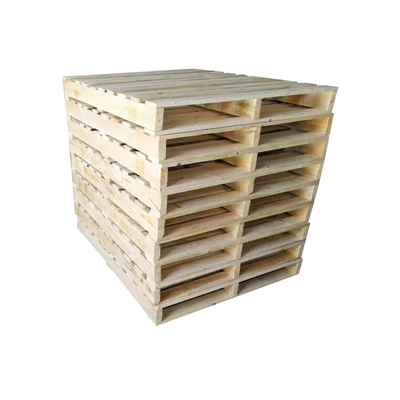
In the dynamic landscape of modern logistics and warehousing, automated material - handling systems have emerged as a game - changer, streamlining operations, enhancing efficiency, and reducing labor costs. As a supplier of round wood pallets, I often encounter the question: Can round wood pallets be used in automated material - handling systems? In this blog post, I will explore this topic in depth, considering the characteristics of round wood pallets, the requirements of automated systems, and the potential benefits and challenges.
Characteristics of Round Wood Pallets
Round wood pallets are crafted from natural wood, which gives them several unique features. First and foremost, they are environmentally friendly. Wood is a renewable resource, and when sourced sustainably, round wood pallets have a relatively low carbon footprint compared to pallets made from other materials such as plastic or metal.
They also offer good load - bearing capacity. The natural strength of wood allows round wood pallets to support a significant amount of weight, making them suitable for transporting heavy goods. Moreover, round wood pallets are relatively easy to repair. In case of damage, a simple nail or a piece of wood can be used to fix the pallet, extending its service life.
However, round wood pallets also have some limitations. Their irregular shape can be a drawback in certain applications. Unlike Square Wood Pallets, which have a standardized rectangular shape, round wood pallets may not fit neatly into some automated storage and retrieval systems. Their round edges can also make it more difficult to stack them uniformly, potentially causing instability during handling.
Requirements of Automated Material - Handling Systems
Automated material - handling systems are designed to operate with a high degree of precision and efficiency. These systems typically include conveyors, automated guided vehicles (AGVs), robotic arms, and storage and retrieval machines. To function properly, they require pallets that meet specific criteria.
One of the key requirements is dimensional consistency. Automated systems are programmed to handle pallets of a certain size and shape. Any deviation from the standard dimensions can lead to malfunctions, such as jams in conveyors or incorrect positioning by robotic arms. Additionally, pallets need to have a flat and stable surface. This ensures that goods can be placed securely on the pallet and that the pallet can be moved smoothly through the system.
Another important factor is compatibility with the handling equipment. For example, some AGVs use forks to lift pallets. The design of the pallet, including the spacing between the boards and the height of the pallet, needs to be compatible with the forks to ensure proper lifting and transportation.
Can Round Wood Pallets Meet the Requirements?
The answer to whether round wood pallets can be used in automated material - handling systems is not a simple yes or no. It depends on several factors.
In some cases, round wood pallets can be adapted to fit into automated systems. For instance, if the automated system is designed with some flexibility in terms of pallet shape and size, round wood pallets may be used. Some modern automated systems are equipped with sensors and adjustable components that can accommodate pallets with non - standard shapes.
However, in most traditional automated systems, the irregular shape of round wood pallets can pose challenges. As mentioned earlier, their round edges can make it difficult to stack them on conveyors or in storage racks. Also, the lack of a standardized rectangular shape can make it hard for robotic arms to grip the pallets accurately.
Potential Benefits of Using Round Wood Pallets in Automated Systems
Despite the challenges, there are potential benefits to using round wood pallets in automated material - handling systems.


One of the main advantages is cost - effectiveness. Wood is generally less expensive than other materials used for pallets, such as plastic or metal. This can result in significant cost savings, especially for companies that require a large number of pallets.
Round wood pallets are also more forgiving in terms of damage. In an automated system, there is always a risk of pallets getting bumped or scratched. Wood pallets can withstand minor damage better than some other types of pallets, and as mentioned earlier, they are easy to repair.
Challenges and Solutions
The main challenges of using round wood pallets in automated systems are related to their shape and dimensional consistency. To overcome these challenges, several solutions can be considered.
One solution is to modify the design of the round wood pallets. For example, adding flat surfaces or edges to the pallets can make them more compatible with automated handling equipment. This can be achieved by attaching wooden boards or other materials to the round pallets.
Another solution is to customize the automated system. Some companies may choose to modify their existing automated systems to accommodate round wood pallets. This could involve adjusting the sensors, conveyor belts, and robotic arms to work with the unique shape of the pallets.
Comparison with Other Types of Pallets
When considering the use of round wood pallets in automated systems, it is useful to compare them with other types of pallets, such as Square Wood Pallets, Blue Pallets Wood, and Solid Wood Pallets.
Square wood pallets are the most commonly used type in automated systems. Their standardized rectangular shape makes them easy to stack, handle, and transport. They are also more likely to be compatible with existing automated equipment.
Blue pallets wood are often used in specific industries or regions. They may have different characteristics in terms of size, weight, and load - bearing capacity. In some cases, they can be used in automated systems, but their suitability depends on the specific requirements of the system.
Solid wood pallets are known for their strength and durability. They can support heavy loads and are often used in industrial applications. While they may be more expensive than round wood pallets, they offer better dimensional consistency and are more likely to be compatible with automated systems.
Conclusion
In conclusion, the use of round wood pallets in automated material - handling systems is a complex issue. While their irregular shape can pose challenges, with the right modifications and customizations, they can be used effectively in certain automated systems. The cost - effectiveness and environmental friendliness of round wood pallets make them an attractive option for some companies.
If you are considering using round wood pallets in your automated material - handling system, I encourage you to contact me for more information. I can provide you with detailed specifications, samples, and advice on how to make the most of round wood pallets in your operations. Let's have a discussion to see if round wood pallets are the right choice for your business.
References
- "Pallet Design and Selection for Automated Material Handling", Journal of Logistics and Supply Chain Management, 2020.
- "Wooden Pallets in Modern Warehousing", International Journal of Warehouse Operations, 2019.
- "Automated Material Handling Systems: A Comprehensive Guide", McGraw - Hill, 2018.